 Plane Parade
The controller’s guide
Plane Parade takes about thirty seconds to learn. This page is for the rest of it: the patience meters, the combo window, the gate colours, and the difference between clearing a shift and clearing it for three Gold Wings.
The controls, in full
There are two of them.
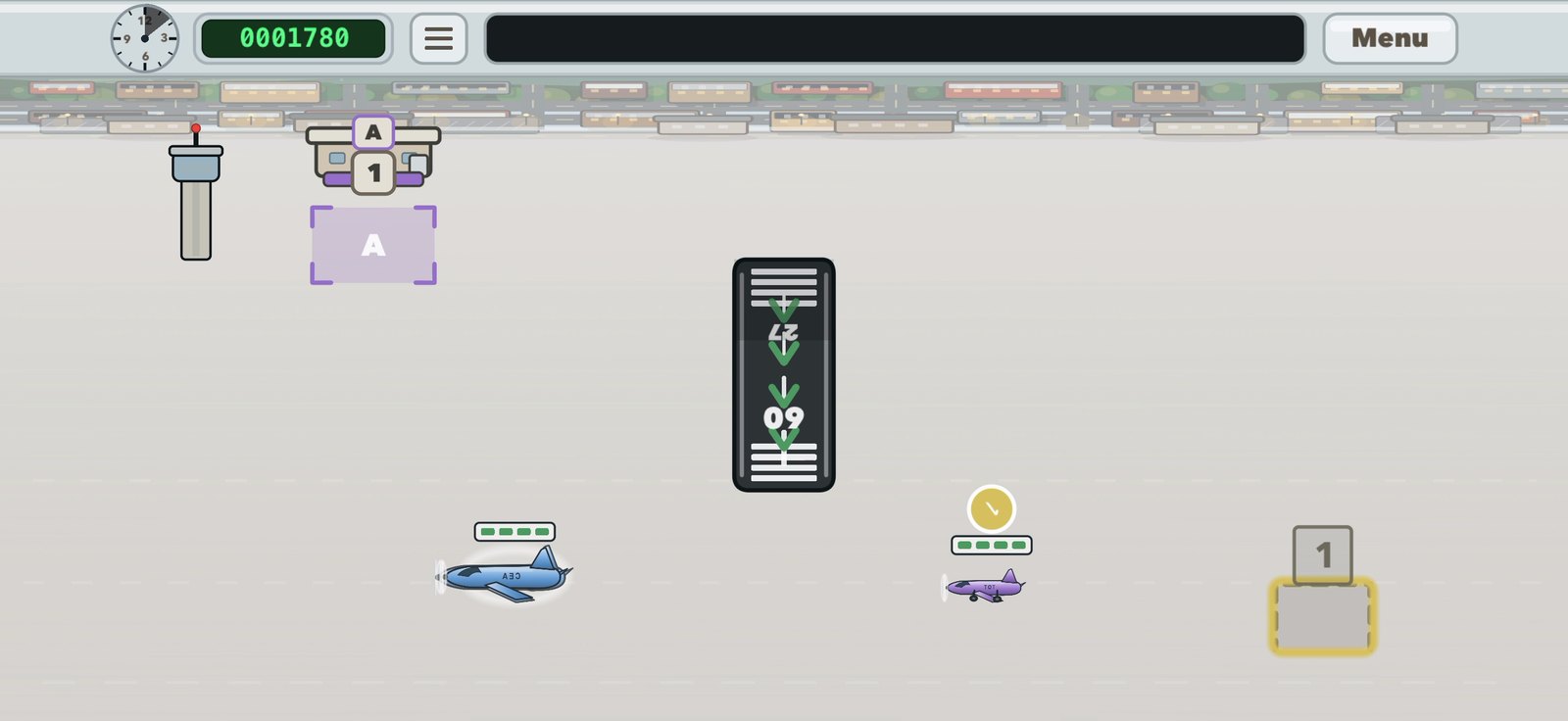
Tap a plane
Anything on the board can be selected: an aircraft circling overhead, one taxiing on the apron, one sitting at a gate. A selected plane glows gold.
Tap a destination
A runway to land or take off, a gate to unload and reload, a hold over space to park, the fuel station, the hangar, or the paint pad. The plane does the rest by itself.
That is the whole interface. Everything else in this guide is about which destination, and when.
Reading the board
Patience bars
Every aircraft carries a small bar of passenger patience. It starts green, slides to yellow, then to red. If it empties, the plane gives up, leaves, and is counted as a lost plane — which forfeits the clean-run bonus and any hope of a Silver or Gold Wing on that shift.
Bubbles
A passenger silhouette over a plane means it wants a gate. A red up-arrow means it is loaded and asking for a runway. A fuel or wrench icon means it needs servicing before it can go anywhere.
Gate colour badges
From the second airport onward, each gate shows the livery colour it wants. Park a matching plane there and you bank a colour-match bonus. Six carriers fly into your airports, so the badges are worth a glance before you commit a landing.
The arrivals board
Bought in the shop, the split-flap board in the top bar shows the liveries of your next two inbounds. Tower Link expands it to five, and adds each aircraft’s class plus whether it will need fuel or repair. It is the single best purchase in the game for turning reaction into planning.
Scoring, combos and money
Your score is your budget
Every fee and bonus you earn on a shift is banked one for one as spendable money. There is no conversion rate and no cap: the number you watch climbing in the top bar is the number you take into the shop afterward. Bigger aircraft pay more, so a wide-body handled well is worth several props.
Early beats On Time beats Late
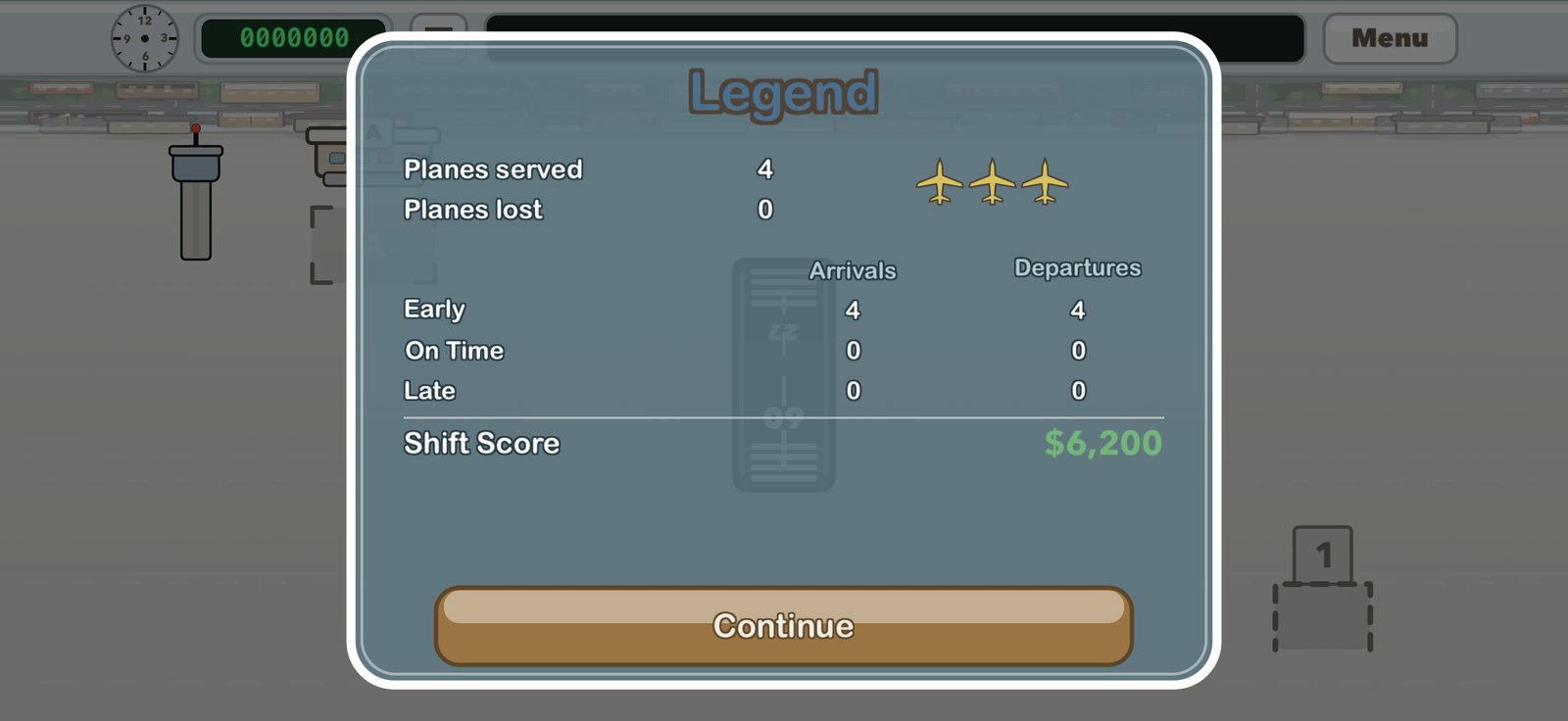
Every arrival and departure gets rated. An arrival’s rating comes from how much patience the passengers had left; a departure’s comes from how long the loaded plane sat waiting for you. Early pays the full bonus, On Time pays most of it, Late pays well under. The end-of-shift report tallies all three so you can see exactly where the money leaked.
The combo window
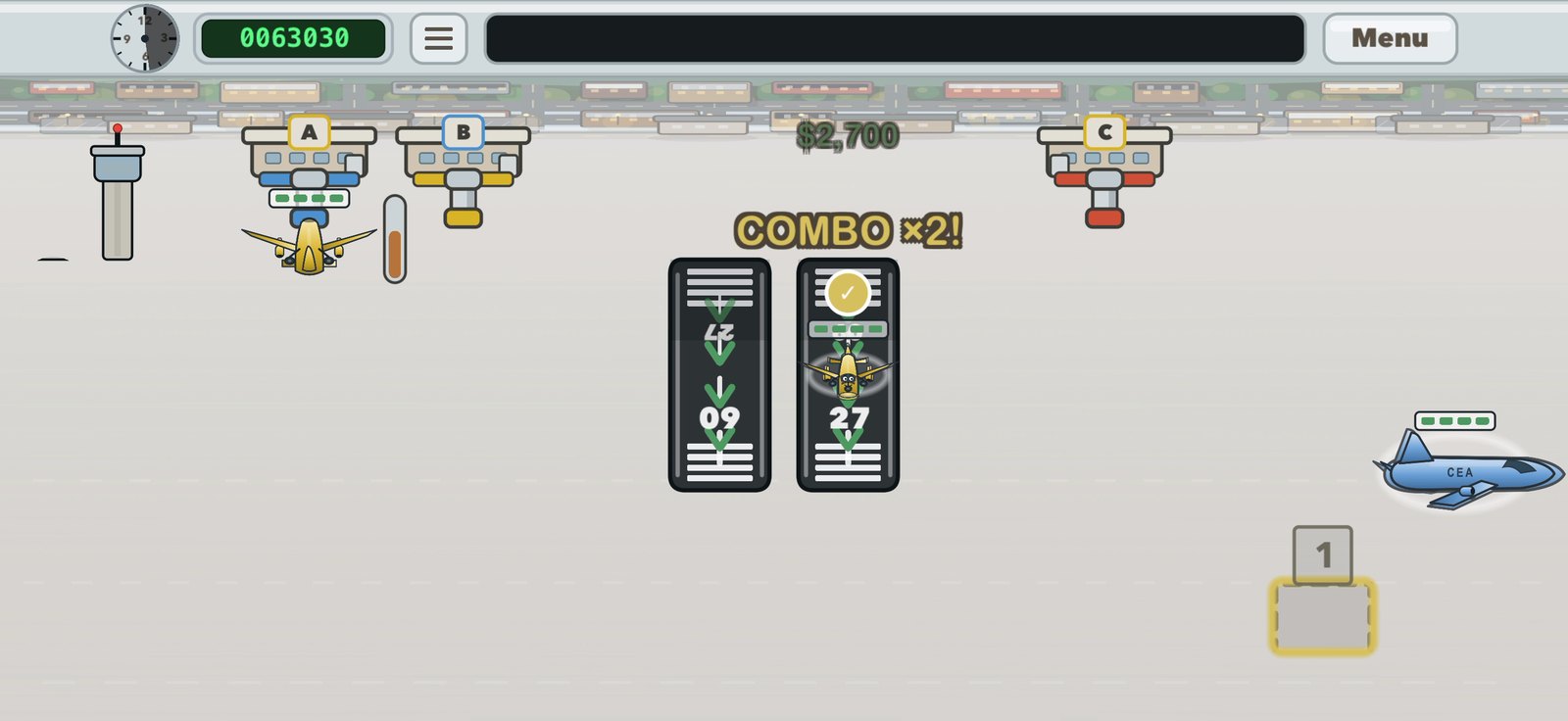
This is the mechanic that separates good controllers from great ones. When an aircraft lands on a strip, that strip’s green arrows begin a roughly fifteen-second countdown. Land the next arrival on that same strip before the arrows lapse and the bonus stacks, up to a four-times multiplier.
Take-offs keep their own separate chain on each runway. Which is why the second runway you buy changes everything: dedicate one strip to arrivals and one to departures and you can hold two chains open at once, all shift long.
Twelve things that will make you better at this
- Buy the second runway early. Splitting arrivals and departures is worth more than almost any other purchase, because it keeps two combo chains alive.
- Use hold over spaces as a patience bank. A plane tucked into a hold over space loses patience far more slowly than one idling on the apron. Park the calm one and deal with the red one.
- Queue, do not wait. You can assign several aircraft to the same runway; they take a numbered place in its queue and land in order. Assign, then go and solve something else.
- Read the gate badge before you land. Landing a green plane when both open gates want purple wastes the turnaround.
- Departures are free money. A loaded plane sitting at a gate is not just missing its Early rating, it is also blocking the gate.
- Watch what needs fuel. A thirsty plane that taxis to the pumps and back costs you a small eternity. The Fuel Truck deletes that trip entirely.
- The Paint Shop is a combo machine. Repaint a plane to whatever the open gate is asking for. It has a limited number of charges per shift, and a shop upgrade raises them from three to five.
- Buy the plow before the snow shift, not during it. Weather always clears on its own, but a closed runway on a busy shift is how clean runs die.
- Fog Fans are a tap, the Snow Plow is automatic. Tap a fogged strip to blow the bank away; the plow dispatches itself the moment snow covers a runway.
- Helicopters bypass the runway. Send one straight to a gate; it lands there and lifts away vertically, so jammed strips do not hold it up.
- Supersonic jets pay enormously and wait for nobody. When one shows up on the board, plan the next thirty seconds around it.
- Sell things you regret. The shop buys most upgrades back, and an upgrade you have not flown with yet refunds in full.
Earning three Gold Wings
1 · Clear it
Reach the goal score before the shift clock runs out. That is the Bronze Wing and the tick on the clipboard.
2 · Lose nothing
Silver needs a shift where not one aircraft gave up. Manage patience, not just throughput: park the calm planes, rescue the red ones.
3 · Beat the Chief
Gold needs a clean shift and the Chief score, which you will not reach on base fees alone. Gold is a combo-chain and colour-match score. Then do it on every shift at that airport, and the Board issues your promotion certificate.
Beyond wings there are eleven commendation stamps for specific feats — a ×4 chain on one strip, every gate and every runway busy at once, eight aircraft in play without losing one, a spotless shift in a storm, a night shift where everything rated Early. They stay on your commendations board for good.
Ready for the tower?
Twenty-four shifts across three airports are free, with the full scoring, shop and progression loop.
Download on the App Store Get it on Google Play See the airports
Mac: macOS 14 or later · iPhone and iPad: iOS 16 or later · Android: 8.0 or later